Agentic AI: The Future of Work
Let’s be real: we’ve all spent way too much time staring at a blinking cursor, trying to figure out the “perfect” prompt to get a chatbot to do exactly what we want. Generative AI is incredible, but having to hold its hand every step of the way is exhausting.
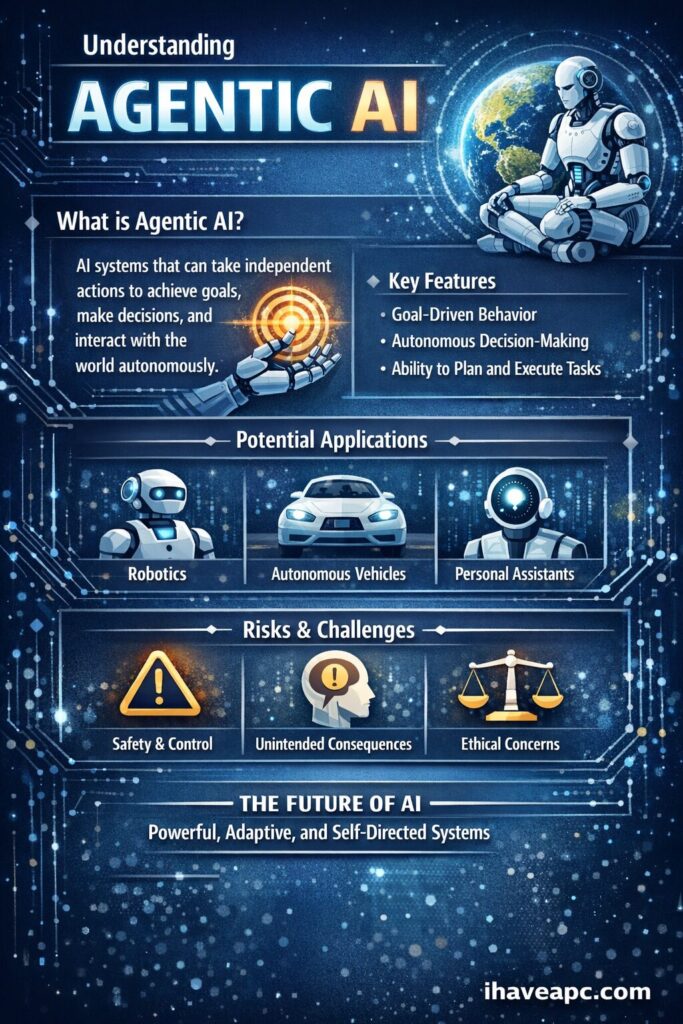
But right now, the tech world is quietly shifting gears. We’re moving past the era of chatbots that just sit there waiting for instructions, and stepping into the era of Agentic AI.
The End of the “Prompt” Era
To understand the shift, think of a traditional AI like a brilliant but completely helpless intern. You ask it to write an email, it writes the email, and then it stops. It waits for you to copy, paste, and hit send.
An AI agent, on the other hand, is like a seasoned executive assistant. You don’t just ask it a question; you give it an objective. According to recent analyses by MIT Technology Review, true agents possess autonomy, they can plan, use tools, and course-correct when things go wrong.
Here is what that evolution looks like in practice:
- Gen 1 (Search Engine): “How do I book a flight to Tokyo?”
- Gen 2 (Chatbot): “Write me a travel itinerary for Tokyo.”
- Gen 3 (AI Agent): “Plan a trip to Tokyo under $2,000, book the cheapest flights, and block out my calendar.” And then—crucially—it actually does it.
Why This is Happening Now
So why are we suddenly seeing agents everywhere in 2026? It boils down to three major upgrades under the hood:
- They finally learned to “think”: Models don’t just spit out the next most likely word anymore. They use advanced reasoning to weigh different strategies and verify facts before taking action, a leap heavily driven by research from labs like OpenAI.
- They have “hands”: Agents are now plugged directly into our tools. They can navigate live websites, pull data from your CRM, or execute Python code on the fly.
- They remember us: With persistent memory, these systems actually learn your quirks, preferences, and daily workflows over time instead of starting from scratch every single chat.
Giving Up the Steering Wheel
The real-world impact is wild. As McKinsey & Company reports on the economic potential of AI, we are looking at massive productivity shifts. Software developers are using agents that proactively hunt down and fix bugs across entire codebases while they sleep.
Everyday folks are starting to hand off their absolute worst admin chores like contesting a medical bill or managing family schedules.
Of course, it’s a little terrifying. Handing an AI the keys to your inbox, or your credit card requires a massive leap in trust. The biggest hurdle right now isn’t making the AI smarter; it’s making sure it stays secure, private, and doesn’t accidentally email your boss a grocery list.
But the transition is already happening. We are no longer just talking to computers; we are finally letting them do the work.
Enjoy.

Stunning HD Wallpapers For Your Desktop #37