Privacy Risks of Browser Extensions
Why Installing Unknown Add-Ons Is a Bad Idea
Browser extensions are small add-ons that enhance the functionality of your browser. They can block ads, save notes, manage passwords, or add helpful shortcuts. Because they seem harmless and easy to install, many people add extensions without giving them much thought. That convenience is exactly why browser extensions have become a common privacy risk.
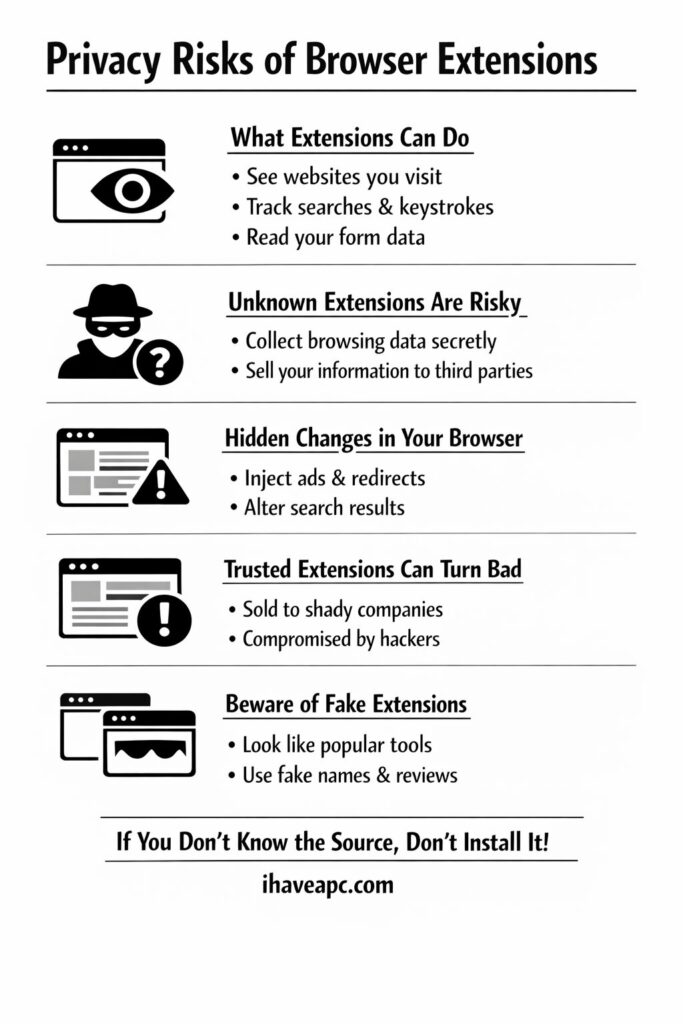
When you install an extension, you are often giving it permission to see and interact with nearly everything you do online. This can include the websites you visit, the searches you make, and even the information you type into forms. Most users are unlikely to notice this access because it occurs quietly in the background.
Why Untrusted Extensions Can Be dangerous
The real danger appears when the extension comes from an unknown or untrusted developer. Some extensions collect browsing data and sell it to advertisers, while others go a step further and actively monitor user behavior. Because extensions run inside your browser, they do not need to show pop-ups or alerts to gather this information. For the user, everything looks normal, even while data is being collected.
Another problem is that extensions can change how websites behave without your knowledge. They may inject advertisements, redirect links, or alter search results. When this happens, users often blame the website or the browser itself, not realizing that an installed extension is responsible. Over time, this can affect both privacy and browsing performance.
Even extensions that start out as safe can become risky later. A popular extension might be sold to a different company, receive a harmful update, or have its developer account compromised. Once installed, these changes can take effect automatically, which means an extension you trusted in the past may no longer deserve that trust.
Fake extensions are also widespread. Many are designed to appear almost identical to well-known tools, using similar names, logos, and descriptions. Their goal is to gain quick installs and quietly harvest data before users realize something is wrong. By the time suspicious behavior is noticed, personal browsing information may already have been collected.
This is why installing unknown extensions is never a good idea. If you do not know who made the extension, you cannot be sure how your data is being handled or where it ends up. In practical terms, installing an untrusted extension is like giving a stranger a window into your online life.
Be Selective When Installing
Using browser extensions safely does not mean avoiding them entirely. It simply means being selective. Installing only extensions you truly need, managing them, checking who developed them, and occasionally reviewing what is already installed can significantly reduce privacy risks. Removing extensions you no longer use is one of the easiest ways to improve browser security.
To sum it up, browser extensions are powerful tools with deep access to your online activity. Trusted extensions can be helpful, but unknown ones carry risks that are easy to overlook. A simple rule works well for most users: if you are not confident about who built the extension, it is safer not to install it at all.
Happy browsing.

Easily Create Portable Apps In Windows Using This Free Tool
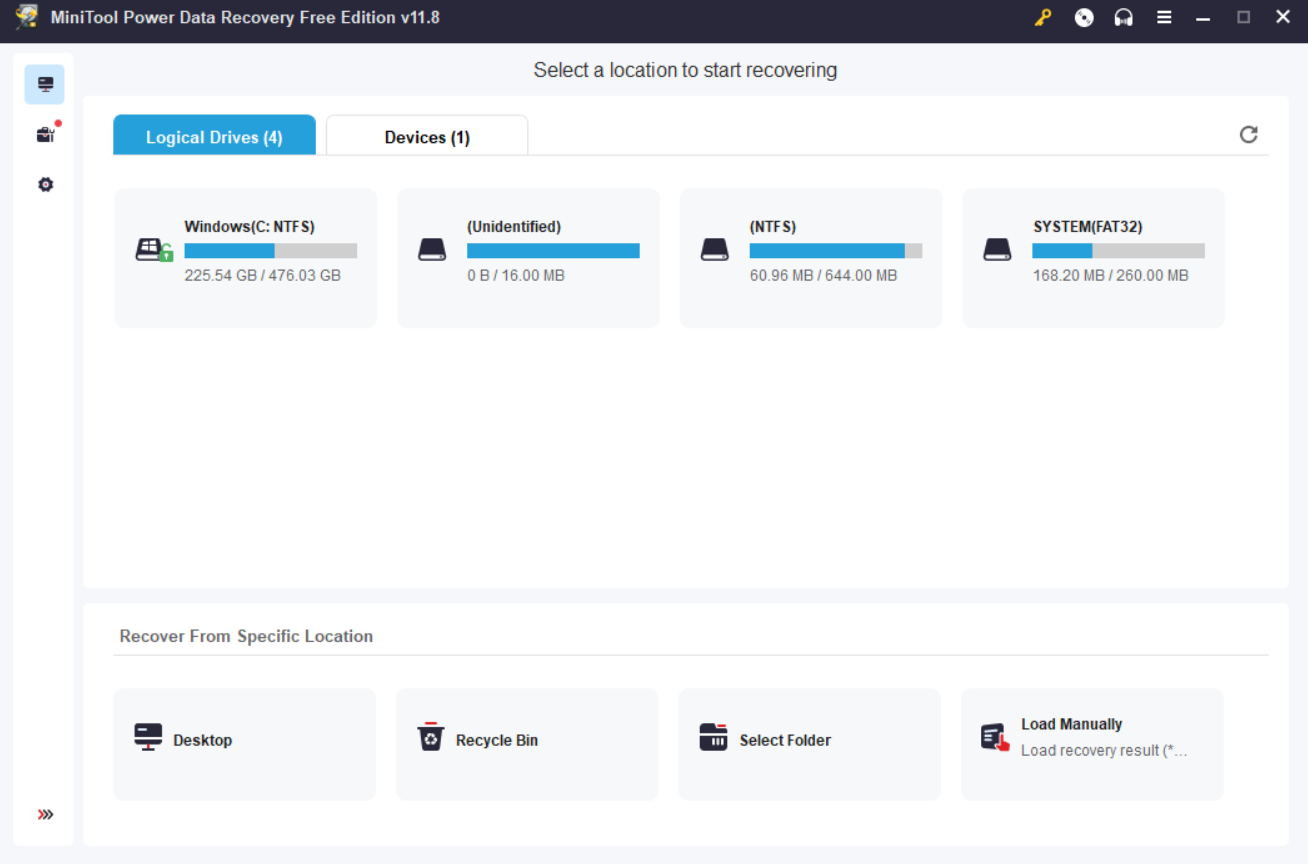
Recover Lost Files Easily With MiniTool Power Data Recovery