How White Noise Can Supercharge Your Focus and Digital Wellbeing
Let’s be honest: trying to focus in the modern world feels like trying to meditate in the middle of Times Square.
Between the constant “pings” of notifications on our phones, the hum of chatter in coffee shops (or open-plan offices), and the sudden roar of traffic outside, our attention spans are under constant attack. We live in an era of digital overload, and finding a quiet mental space to actually get deep work done seems harder than ever.
This is where “digital wellbeing” comes in. Digital wellbeing isn’t just about locking your phone in a drawer for a weekend detox. It’s about building a healthier, more intentional relationship with technology. It means using digital tools to help our brains function better, rather than letting them constantly distract us.
One of the simplest, yet most effective digital tools for reclaiming your focus is something you might already know: white noise.
But what exactly is this magical static, and why does your distracted brain love it so much? Let’s break it down in simple terms, human to human.
What is White Noise, Anyway?
To understand white noise, it helps to think about light.
If you take a prism and shine white light through it, that light breaks apart into a beautiful rainbow showing every color visible to the human eye. White light isn’t just one color; it’s a combination of all colors shining equally at once.
White noise works the exact same way, but for your ears.
It isn’t a single tone. White noise is a mixture of every sound frequency a human being is capable of hearing (from deep lows to high squeaks), all playing at the exact same volume at the same time.
Because it contains thousands of different tones playing simultaneously, your brain gets confused. It can’t pick out just one single sound to focus on. Instead, your brain mashes them all together into a flat, constant wall of sound—like the “shhhhhh” of static on an old television that isn’t tuned to a channel.
Real-world examples of white noise:
- A high-speed fan whirring in the corner.
- The relentless hiss of air rushing through an airplane cabin.
- A very heavy, steady downpour of rain on a roof.
Why Does Static Improve Focus? (The “Auditory Blanket”)
It seems counterintuitive, right? If the world is too noisy, why would adding more noise help you concentrate?
The secret lies in how your brain handles distractions.
1. The Problem Isn’t Noise, It’s Sudden Noise
Imagine you are sitting in a perfectly silent room trying to read. If someone drops a pen, it sounds like a cannon going off. Your brain immediately jerks away from your book to investigate the threat.
In a dead-silent environment, every tiny sound is dramatic.
Now, imagine that same room has a loud air conditioner running. If someone drops a pen now, you probably won’t even notice it.
White noise acts as an “auditory blanket.” It raises the baseline level of sound in the room just enough to smooth out the peaks. Jarring noises—a dog barking, a door slamming, a phone ringing—blend into that blanket of static instead of startling you. By masking those sudden spikes in sound, white noise protects your concentration.
2. Stopping Your “Eavesdropping Brain”
As humans, we are wired to pay attention to speech. It’s an evolutionary survival tactic. If you are in a coffee shop and two people nearby are having an interesting conversation, your brain will subconsciously try to listen in, even if you are trying desperately to write an email.
Understanding speech requires a lot of mental energy. Every time your brain tunes into a background conversation, it’s stealing processing power away from the task at hand.
White noise is a dense wall of sound that drowns out distinct words. It turns intelligible speech into unintelligible murmurs. Once your brain realizes it can’t understand what is being said, it stops trying to listen, freeing up that mental energy for your work.
A Note on Comfort: Finding Your “Color”
While “white noise” is the catch-all term people use, true mathematical white noise (like harsh TV static) is actually quite high-pitched and shrill. Many people find it unpleasant after a few minutes.
If you find pure white noise too harsh, don’t give up! You probably just need a different “color” of noise.
- Pink Noise: This is deeper and softer than white noise. It dials back the high-pitched hiss and bumps up the lower tones. Most people prefer this over white noise for concentration. Think: steadily falling rain or rustling leaves.
- Brown (or Red) Noise: This is even deeper. It has almost no high pitch and is very heavy on the bass. It’s a deep, rumbling sound that many find incredibly soothing and grounding. Think: a roaring waterfall or distant thunder.
Your Digital Wellbeing Toolkit: Free Resources
Using noise generators is a positive step for digital wellness because it is an active choice. You aren’t passively scrolling; you are intentionally setting up your digital environment to support your mental state.
You don’t need expensive machines to generate these sounds.
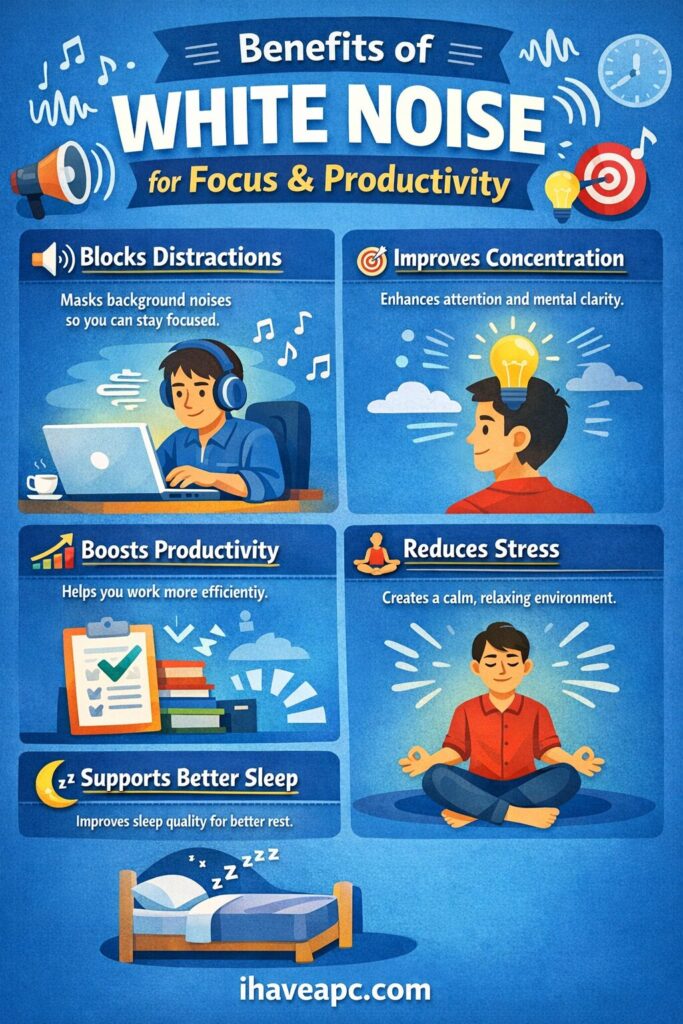
Here are some excellent free tools accessible to anyone with an internet connection or smartphone:
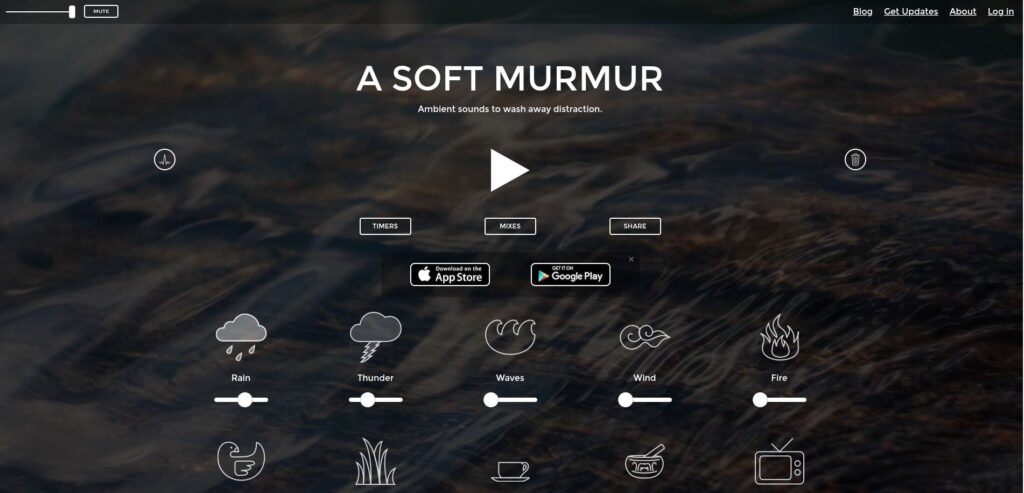
- A Soft Murmur (asoftmurmur.com): This is fantastic because it lets you be the DJ. You get sliders for rain, thunder, waves, wind, and static. You can mix them together to create your perfect environment. (e.g., 70% rain, 30% thunder). Also available as an iOS and Android app.
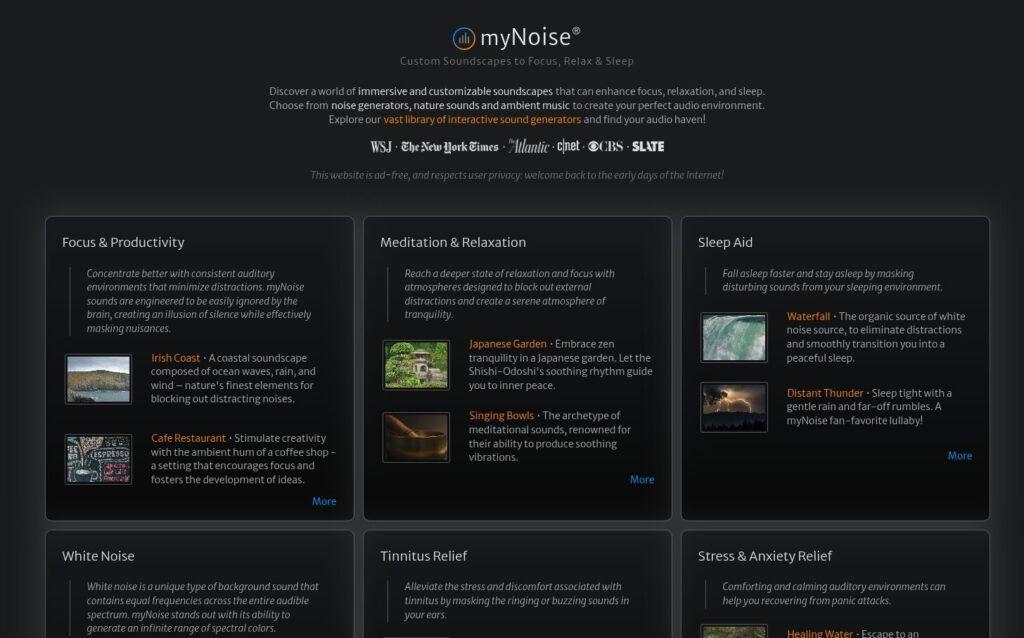
- MyNoise (mynoise.net): The gold standard for audiophiles. It has hundreds of incredibly high-quality sound generators (“White Noise & Co,” “Rain Noise,” etc.) that are fully calibrated to block out distractions.
- YouTube: If you just want something simple, search YouTube for “brown noise screen black.” You’ll find videos that play the sound for an entire workday with a dark screen so it doesn’t waste battery or distract your eyes.
The Final Takeaway
If you find yourself constantly derailed by stray sounds or your own wandering thoughts, try wrapping your brain in an auditory blanket. It’s a simple, free, and effective way to use technology to find a little more peace in a noisy world.
Stay focused, stay happy.

The Wired Earphone Comeback: Why It’s Better for Your Digital Wellbeing

Why Offline Work is Deep Work