The Wired Earphone Comeback: Why It’s Better for Your Digital Wellbeing
If you’ve noticed a sudden surge of people untangling white cords on the subway or seen your favorite creators rock old-school headphones, you aren’t imagining things. Wired earphones are officially cool again.
While Gen Z initially brought them back as a vintage “Y2K aesthetic,” the trend has evolved into something much deeper: a collective rebellion against the “always-on” consumer tech landscape. From a digital wellbeing and health perspective, swapping your sleek wireless earbuds for a trusty old wire might just be the best lifestyle downgrade you ever make.
Here is a breakdown of why old-school wired headphones are better for your mind, ears, and overall health.
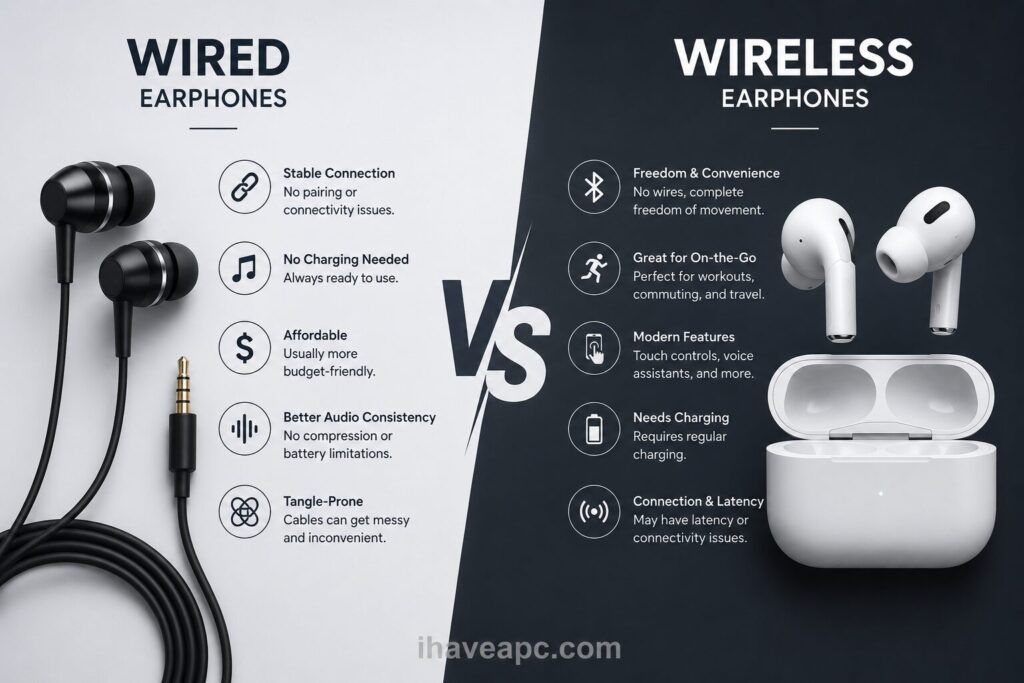
1. The Power of “Intentional Connection”
Wireless earbuds are designed to be friction-free. They connect instantly, sit invisibly in your ears, and encourage you to stream a non-stop soundtrack to your life whether you’re washing dishes, walking the dog, or sitting in a meeting.
The problem? This creates an auditory buffer between you and reality.
- The Wired Boundary: A wire acts as a physical boundary. To listen to something, you must explicitly choose to pull out your cord, untangle it, and plug it into your device.
- Mindful Consumption: This physical tether grounds you. It turns listening into an intentional act rather than a passive, background habit. When the wire is plugged in, you are consciously consuming media; when you unplug it, you are fully back in the room.
2. Breaking the “Always-On” Audio Loop
Because wireless earbuds are so lightweight and boast ever-expanding battery lives, consumers are spending significantly longer stretches of time with devices wedged inside their ear canals. This “invisible attachment” has real biological consequences.
Continuous occlusion of the ear canal blocks natural airflow, trapping moisture and turning your ears into a breeding ground for bacteria.
Inserting ear devices for prolonged periods especially during physical activities like gym sessions dramatically increases the ear’s susceptibility to conditions like otitis externa (swimmer’s ear), microbial buildup, and noise-induced hearing loss. The physical clunkiness of wired headphones naturally encourages you to take them off when you’re done, giving your ear canal a necessary break to breathe and clean itself.
3. Minimizing Long-Term Radiation Exposure
While wireless earbuds use low-power Bluetooth technology, they still emit a form of non-ionizing electromagnetic field (EMF) radiation directly next to your skull. For years, the general consensus has been that Bluetooth EMF emissions are too weak to cause short-term biological harm, especially when compared to the direct radiation of a cellular phone pressed against the ear.
However, long-term wellness researchers are urging caution regarding our shift toward 24/7 wearable tech. Recent epidemiological studies utilizing advanced statistical modeling have begun exploring the cumulative effects of prolonged daily Bluetooth use on highly sensitive tissues near the head and neck.
For instance, a 2024 study published in Scientific Reports highlighted a potential correlation between extensive, long-term daily Bluetooth headset usage and an increased risk of developing thyroid nodules.
By opting for a physical wire, you completely eliminate the stream of radiofrequency radiation traveling directly across or inside your head, offering peace of mind for long-term health.
4. Curing “Battery Anxiety”
Digital wellbeing isn’t just about physical health; it’s about reducing low-grade psychological stress.
Our modern lives are plagued by micro-anxieties, and keeping track of the battery percentages of your phone, your laptop, your smartwatch, and your left and right earbuds is exhausting. Wired headphones require zero charging, zero firmware updates, and zero pairing troubleshooting. They just work. Removing that tiny layer of daily maintenance frees up unexpected cognitive space.
Making the Switch
| Feature | Wireless Earbuds | Wired Earphones |
| Mindset | Passive, continuous background listening | Intentional, focused audio consumption |
| Ear Hygiene | High risk of prolonged occlusion and bacteria | Higher likelihood of regular breaks |
| EMF Exposure | Continuous low-power proximity to the head | Zero radiofrequency radiation from the cord |
| Mental Load | Requires charging, pairing, and tracking | Plug-and-play simplicity |
To sum it up, if you are looking to reclaim your attention span, protect your hearing, and unplug from the overwhelming matrix of wearable metrics, it might be time to fish those old wired earphones out of your drawer. Your brain, your ears and your overall digital wellness will thank you.
Happy listening.

The Rise of “Quiet Tech”: Why Subscribing to Fewer Apps is the New Luxury

Which is Better: Digital vs. Offline Journaling