EMF and Digital Wellness
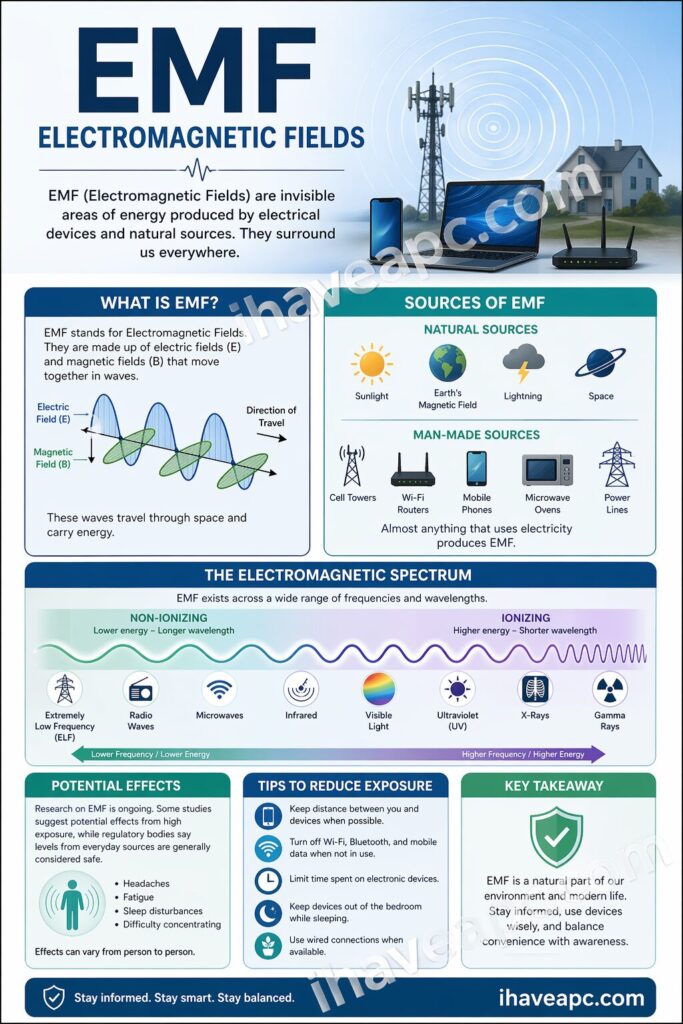
We live in an era where our smartphones and computers feel like extensions of our own bodies. With so much of our lives tethered to screens, it is entirely natural to worry about how these devices are affecting our health. One of the most common concerns is the invisible energy they emit: Electromagnetic Fields (EMF).
But what does science actually prove? Let’s take a grounded, factual look at how our devices affect us—and why embracing digital wellness and limiting screen time is one of the best things you can do for your mind and body.
The EMF Question: What Does Science Actually Say?
It is incredibly common to hear that the EMF radiation from mobile phones and Wi-Fi routers is a major health hazard. However, to truly understand the impact, we have to look at the scientific consensus from leading global health authorities.
Here is the candid reality: There is currently no conclusive scientific evidence that the everyday use of mobile phones and computers causes severe health issues like cancer. To understand why, it helps to know the difference between the types of radiation:
- Ionizing Radiation: This includes X-rays and UV rays from the sun. This type of radiation carries enough energy to break chemical bonds and damage human DNA, which can lead to cancer.
- Non-Ionizing Radiation (RF-EMF): Mobile phones, computers, and Wi-Fi emit radio frequency electromagnetic fields. This is low-energy, non-ionizing radiation. It simply does not pack enough energy to damage DNA or mutate cells.
According to the World Health Organization (WHO) and the National Cancer Institute (NCI), decades of extensive research have failed to show a consistent link between non-ionizing EMF and adverse health outcomes.
The only proven physiological effect of RF-EMF from a mobile phone is a very minor, localized heating of the tissue (the slight warmth you feel against your ear during a long call), which your body’s normal temperature regulation easily handles.
While research is always ongoing, the scientific consensus is clear: the invisible waves connecting your devices aren’t the boogeyman they are often made out to be.
The Real Culprit: Why Limiting Screen Time is Crucial
While EMF might not be the hidden danger we fear, our devices are impacting our health in very real, measurable ways. The issue isn’t the invisible waves; it is how our heavy screen usage affects our daily habits.
Institutions like the Mayo Clinic and Harvard Health heavily advocate for digital detoxes and limiting screen time. Here is the research-backed proof of why pulling away from your screens improves your health:
1. Reclaiming Your Sleep (The Blue Light Effect)
Our bodies rely on a natural circadian rhythm to tell us when it is time to sleep. Screens emit artificial blue light, which tricks the brain into thinking it is still daytime. This suppresses the production of melatonin, the hormone responsible for sleep. By limiting screen time—especially an hour before bed—you allow your natural sleep-wake cycle to reset, leading to deeper, more restorative sleep.
2. Boosting Mental and Emotional Well-being
Constant connectivity comes at a psychological cost. A steady stream of notifications, emails, and social media creates a state of low-grade, chronic stress. Studies have consistently linked heavy smartphone and social media use to higher rates of anxiety, depression, and feelings of isolation. Limiting your screen time reduces this digital over-stimulation, giving your brain the quiet space it needs to process emotions, lower cortisol (stress) levels, and improve your overall mood.
3. Protecting Your Physical Health
“Tech neck,” eye strain, and a sedentary lifestyle are the true physical hazards of the digital age. Staring at screens reduces our blink rate, causing dry eyes and fatigue. Furthermore, hours slumped over a keyboard or phone compress the spine and lead to chronic posture issues. Stepping away from your devices naturally encourages physical movement and relieves musculoskeletal tension.
4. Restoring Focus and Cognitive Function
Our brains are not wired for the constant multitasking that modern devices demand. The endless pinging fragments our attention spans, making it difficult to engage in deep, focused work. A digital detox allows your brain to recover its natural ability to concentrate, ultimately boosting productivity and mental clarity.
Simple Steps for Better Digital Wellness
You do not have to throw your smartphone into the ocean to be healthy. Digital wellness is about intentional use. Here are a few easy ways to build better boundaries with your tech:
- The 20-20-20 Rule: To combat digital eye strain, every 20 minutes, look at something 20 feet away for at least 20 seconds.
- Use Distance to Your Advantage: If you are still concerned about EMF, distance is your best friend. The strength of an electromagnetic field drops exponentially the further you are from the source. Use speakerphone or wireless earbuds, and do not sleep with your phone directly under your pillow. (As a bonus, keeping your phone across the room stops you from scrolling in bed!)
- Establish Tech-Free Zones: Designate areas in your home, such as the dining room table or the bedroom, where screens are not allowed. This fosters better real-world connections and healthier sleep hygiene.
- Track and Trim: Use your phone’s built-in screen time tracker to set daily limits on your most distracting apps.
By focusing on the proven, tangible impacts of screen time rather than the unfounded fears of EMF, you can take meaningful steps toward a healthier, more balanced, and deeply present life.

A Realistic Guide to Breaking the SM Doom Scrolling Loop

Why Offline Work is Deep Work