The Smartest Phone Move You Can Make in 2026 Is Going “Dumb”
Remember the satisfying snap of closing a flip phone? It was a definitive end to a conversation. There was no lingering notification dot, no infinite feed waiting to be scrolled, and certainly no background process quietly uploading your location history to a server in Silicon Valley.
Today, our relationship with phones is defined by a desperate, clawing need for connection that ironically leaves us more disconnected from reality and deeply vulnerable. We carry supercomputers in our pockets that are marvels of engineering, but they have also become the primary vector for surveillance capitalism and a massive drain on our mental bandwidth.
It might sound like Luddite nostalgia, but a growing movement of privacy advocates and digital minimalists are making a compelling case: switching back to a “dumbphone”—or more accurately, a feature phone is actually the ultimate modern power move for your privacy, safety, and digital hygiene.
It’s security through subtraction. And in an era of relentless data harvesting, subtraction is a superpower.
The Privacy Paradox: Paying to Spy on Yourself
Let’s be honest about the transactions we make with smartphones. We get amazing convenience—maps, banking, instant knowledge—in exchange for virtually everything else about us.
Smartphones are essentially sophisticated tracking beacons. The operating systems (iOS and Android) and the apps that run on them operate on a model of aggressive data extraction. Apps often demand permissions far beyond their function—why does a flashlight app need access to your contact list?
This isn’t conspiracy theory; it’s the business model. Shoshana Zuboff, author of The Age of Surveillance Capitalism, details how our “behavioral surplus“—the digital exhaust we leave behind just by using our phones—is scraped, packaged, and sold to advertisers to predict and influence our future actions.
A feature phone breaks this cycle. A Nokia 3310 reissue or a Punkt MP02 doesn’t have an app store. It doesn’t have Facebook, TikTok, or Google Maps running in the background. By using an OS so simple it can barely render a webpage, you are immune to the vast majority of the surveillance economy.
There are no advertising IDs to track your cross-site behavior because there are no sites to cross.
Location, Location, Location (Is None of Their Business)
Perhaps the most visceral privacy intrusion is location tracking. A smartphone doesn’t just know where you are right now; it knows where you sleep, where you work, which doctors you visit, and how often you go to the liquor store.
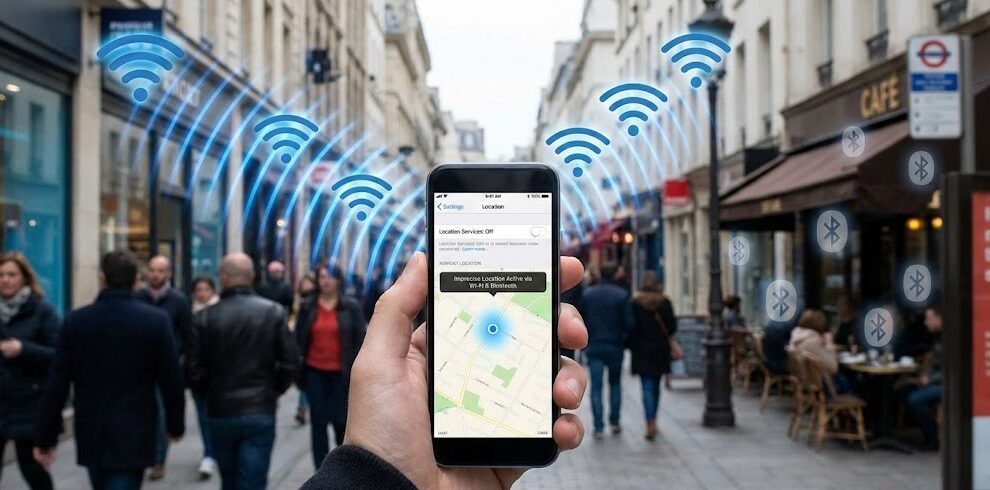
Even if you turn off GPS, smartphones use sophisticated techniques like Wi-Fi sniffing and Bluetooth beaconing to triangulate your position with alarming accuracy. This data is often bought and sold by third-party brokers with very little oversight, as highlighted by numerous investigative reports into the location data marketplace.
A dumbphone is significantly “dumber” about where you are. It relies almost exclusively on cellular tower triangulation. While your mobile carrier can still identify your general vicinity (which tower you are pinged off of), they cannot pinpoint you to a specific room in a building or trace your exact walking path through a park.
The difference between “they know I’m in the downtown district” and “they know I’m sitting in chair #4 at Starbucks” is a massive gulf in privacy.
Situational Awareness and Digital Hygiene
Safety isn’t just about digital threats; it’s about the physical world. How many times have you almost stepped into traffic, missed your train stop, or ignored the people around you because your head was buried in a screen?
Smartphones are engineered to hijack attention through what the Center for Humane Technology calls the “attention economy.” The infinite scroll and variable reward schedules (like pulling a slot machine lever for likes) are designed to create dopamine loops that make putting the phone down physically difficult.
A feature phone brings you back to reality. It returns your situational awareness. You become more present, more observant, and less of a target for real-world opportunistic crime. Furthermore, the anxiety of the “always-on” news cycle evaporates. When your phone only does calls and texts, you stop checking it every 30 seconds. The resulting mental clarity is profound.
The Elephant in the Room: The 2FA Nightmare
If the argument for the dumbphone is so strong, why haven’t we all switched?
There is one massive, glaring practical hurdle in the year 2026: Two-Factor Authentication (2FA).
Our digital security infrastructure has largely pivoted to smartphone dependence. Most secure logins require an authenticator app like Google Authenticator, Authy, or Microsoft Authenticator to generate time-based codes.
A feature phone cannot run these apps. This is a major pain point. If your company requires Duo Mobile to log into your email, you cannot use a dumbphone as your sole device.
So, how do the “dumbphone” converts handle this? They have to get creative, and it involves a trade-off:
- The SMS Fallback: Many services still offer SMS text messages as a 2FA option. A dumbphone handles this perfectly. However, it is crucial to note that cybersecurity experts advise against SMS 2FA for high-value targets (like banking) due to the risk of SIM-swapping attacks. But for average users, it is still vastly better than no 2FA at all.
- Hardware Tokens: For the security-conscious, the best answer is a hardware key like a YubiKey. You plug this into your computer to authenticate. It’s more secure than a phone app anyway, but it requires carrying another dongle.
- The “Zombie Smartphone Drawer”: Many dumbphone users keep an old smartphone, stripped of all personal data and SIM card, locked in a desk drawer at home. They connect it to Wi-Fi once a day solely to get authentication codes or handle banking apps that require a smart device.
The Intentional Choice
Switching to a dumbphone isn’t about rejecting technology. It’s about rejecting the passive acceptance of technology that doesn’t serve your best interests.
It is an acknowledgment that convenience has come at too high a price. By choosing a device with limitations, you are actually choosing liberation. You are choosing to keep your data to yourself, to be present in the physical world, and to stop feeding the algorithmic beast.
It’s not an easy transition. The lack of Spotify, Uber, and easy 2FA is jarring. But after the initial withdrawal, many find a surprising sense of calm. In a world screaming for your attention and your data, the quietest phone in the room might just be the smartest one.
Stay safe out there in this always online digital jungle.

How Social Media Breeds Low-Grade Anxiety

How White Noise Can Supercharge Your Focus and Digital Wellbeing