Ever been stopped by a wavy word, asked to pick out all the traffic lights before entering a website, or prompted to click a box to verify if you are really human?
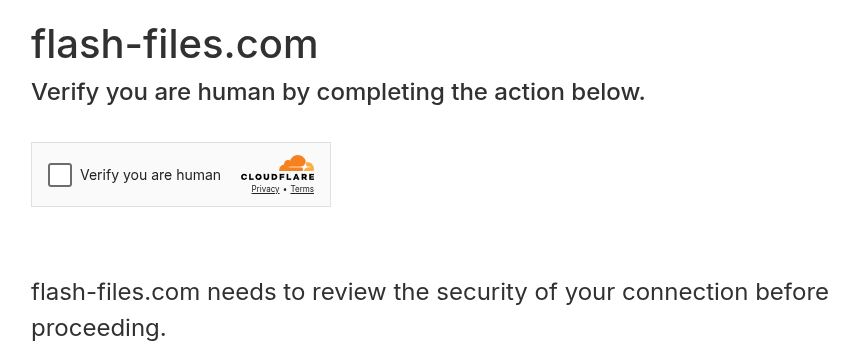
That’s a CAPTCHA at work! These small online puzzles are everywhere, acting as a crucial gatekeeper to keep the internet safe and smooth for real people like you.
What is a CAPTCHA, Anyway?
The name CAPTCHA stands for “Completely Automated Public Turing test to tell Computers and Humans Apart.”
In simple terms, it’s a quick, easy test designed for humans to pass, but nearly impossible for computer programs (known as “bots”) to solve. Think of it as a digital bouncer asking, “Are you human?” before letting you in.
How Do They Work Their Magic?
CAPTCHAs cleverly use tasks that our brains excel at, but which confuse even the smartest bots. Here are the most common types:
Distorted Text (The Old Reliable):
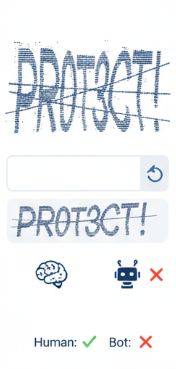
You see squiggly, stretched, or overlapping letters and numbers. Your human brain effortlessly deciphers “h-e-l-l-o” even if it looks like it’s been through a funhouse mirror. A bot, however, sees a jumble of pixels and gets stumped by the distortion.
Image Recognition (The Picture Puzzle):
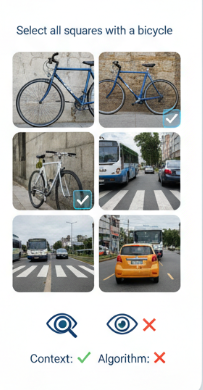
“Select all squares with a bicycle,” it commands. Your vast real-world experience immediately tells you what a bicycle looks like from any angle or in any condition. Bots, while improving, struggle with context, subtle variations, or low-quality images, often mistaking a shadow for an object or missing parts.
The “I’m Not a Robot” Checkbox (The Sneaky One):

This one is genius! When you click that box, the real test isn’t just the click itself. The system is actually watching how you behave before and during the click. It analyzes things like:
- Your mouse movements: Did your cursor travel in a perfectly straight, robotic line, or a more natural, slightly wobbly human path?
- Timing: How long did you pause?
- Browser history: Is your overall online behavior consistent with a human user?
If you pass these subtle checks, you sail through. If something seems off, then you’ll usually get an image puzzle as a backup.
Why Do We Need Them?
CAPTCHAs are essential for protecting websites and, by extension, us. Without them, the internet would be overrun with malicious bots performing all sorts of digital mischief:
- Spam Overload: Imagine your email inbox and comment sections flooded with endless junk.
- Fake Accounts: Social media and online services would be swamped with millions of fake profiles.
- Ticket Scalping: Bots could instantly buy up all concert tickets or limited-edition products, leaving none for real fans.
- Security Attacks: Bots constantly try to guess passwords, posing a major threat to your online accounts.
So, the next time you encounter a CAPTCHA, remember it’s not just a nuisance. It’s a clever, simple, yet powerful tool working tirelessly in the background, making sure the digital world remains a safer, more human-friendly place for everyone.
Happy surfing.