

Social media has become an integral part of modern life, but its seemingly harmless nature hides a powerful, meticulously engineered design: to monetize your attention and data.
This isn’t an accident; it’s a core function driven by a deep understanding of human psychology and the brain’s reward system.
The social media platforms we use every day are not just communication tools. they are sophisticated machines built to form habits and keep us engaged for as long as possible.
Dopamine hits
At the heart of this design is the concept of dopamine hits. Dopamine is a neurotransmitter in the brain associated with pleasure, motivation, and reward. When we do something that feels good, like eating a delicious meal or receiving praise, our brain releases dopamine.
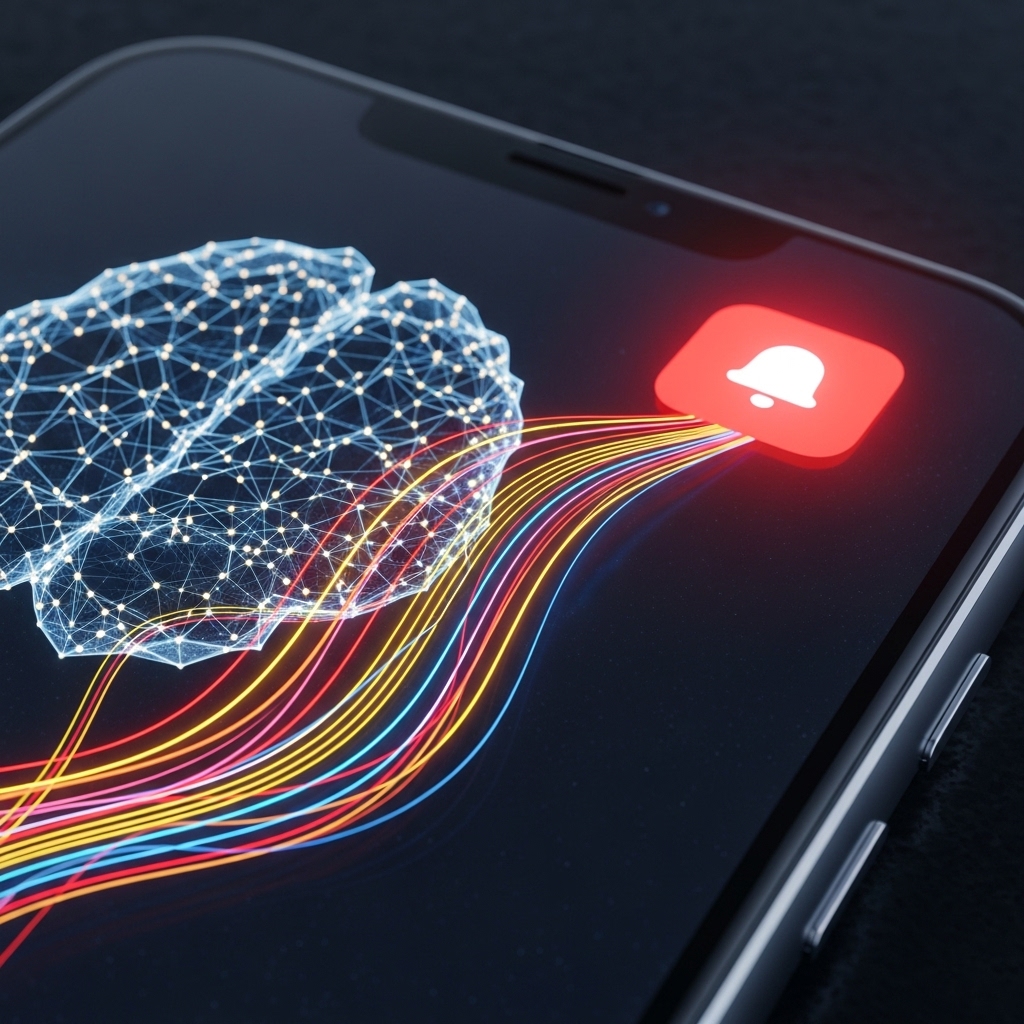
Social media platforms have learned to hack this system, creating a continuous feedback loop of unpredictable rewards.
Think about the simple act of scrolling through your feed.
You never know what you’ll see next: a funny meme, a post from a friend, or a piece of breaking news. This variable reward schedule is incredibly powerful and has been shown to be more effective at forming habits than predictable rewards.
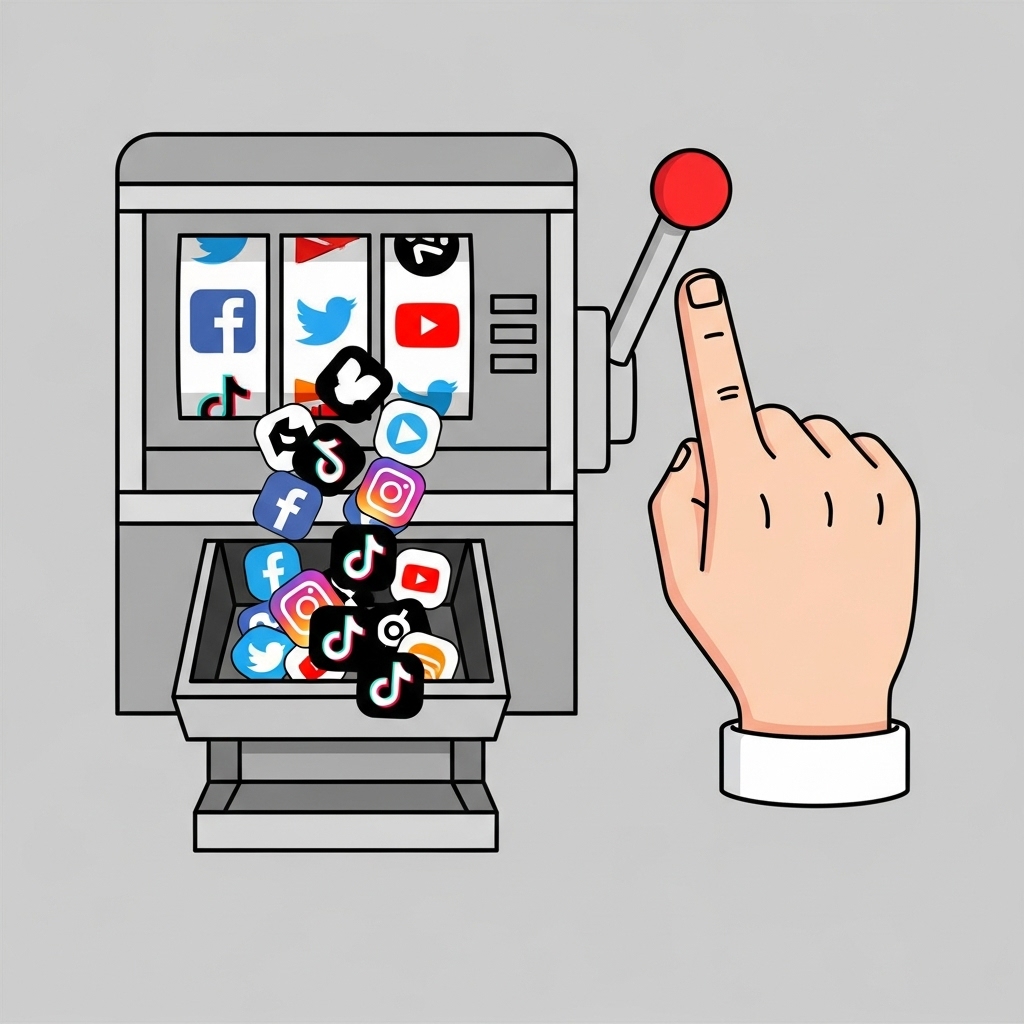
It’s the same psychological principle that makes gambling so addictive. Just like a slot machine, the next pull of the lever (or swipe of the thumb) might reveal a jackpot of interesting content, keeping us coming back for more.
The design features of these platforms are explicitly crafted to maximize these dopamine hits. Notifications are a prime example. The red badge on an app icon or the vibration in your pocket signals a potential reward: a like on your photo, a comment on your post, or a new follower.
These are not just alerts; they are triggers that demand our attention and promise a reward. Each time we receive one, our brain gets a small shot of dopamine, reinforcing the behavior of checking the app.
Infinite scrolling
The pull to refresh motion is another brilliant piece of habit-forming design. It mimics the act of pulling a lever, providing an instant, unpredictable reward in the form of new content. This is a deliberate, gamified mechanic that turns a simple act into a craving.
Beyond these mechanics, social media is built to create a constant fear of missing out, or FOMO. Seeing curated highlights of other people’s lives, their vacations, their successes, their perfect moments creates a sense of anxiety that we are not living up to a certain standard.
To alleviate this, we are driven to engage more, to share our own highlights, and to consume more content to stay in the loop.
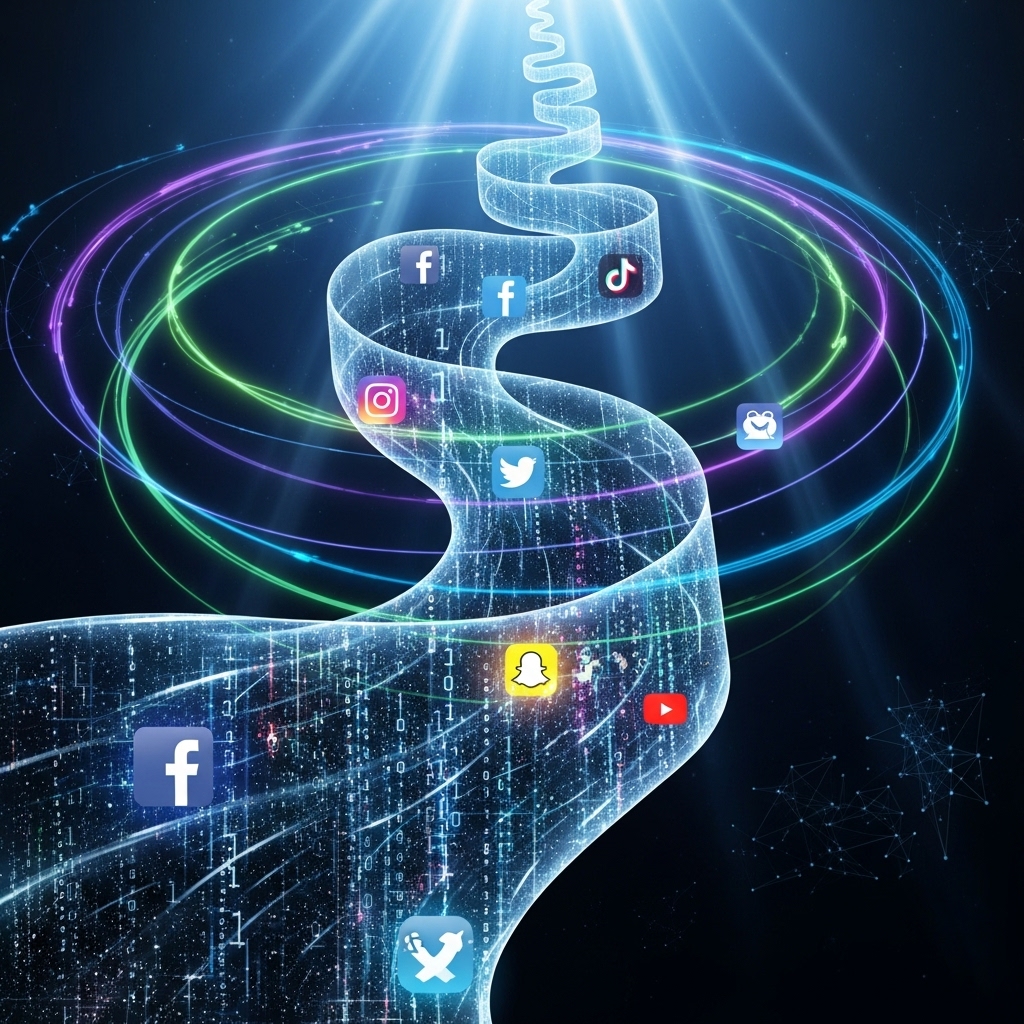
This cycle is a potent driver of engagement, making it difficult to put the phone down. The endless scroll, a feature on many platforms, is designed with the same purpose. It removes the natural stopping point of reaching the end of a page, creating an infinite stream of content that can hold our attention indefinitely.
The consequences of this engineered engagement are significant and often unseen. Constant connectivity and the pressure to maintain an online persona can lead to increased anxiety, depression, and loneliness.
Self-worth and validation
We are conditioned to seek validation through likes and comments, which can erode our self-worth and tie our happiness to the unpredictable rewards of a digital audience.
Our ability to focus and engage in deep work or sustained conversations is being diminished by a constant need to check our phones for the next dopamine hit.
The platforms are designed to be a frictionless experience, with every click and swipe leading us deeper into a rabbit hole of content, all while gathering data about our preferences to serve us more targeted, and therefore more engaging, ads.
This is the core business model: our attention is the product, and we are the ones paying with our time and mental well-being.
Social media addiction
The dangers of social media addiction are real and should not be taken lightly. Like any addiction, it can lead to a loss of control, where our use of social media interferes with our daily responsibilities, relationships, and mental health.
The warning signs are similar to other forms of addiction: spending more time than intended on platforms, feeling anxious or irritable when you can’t access them, prioritizing social media over real-life interactions, and a persistent craving for the next notification or piece of content.
Recognizing these signs is the first step toward taking back control. If you or someone you know exhibits several of these behaviors, it may indicate a problem:
- Preoccupation: A persistent and intense urge to think about or use social media, even when engaged in other activities. This can include planning your next post or constantly checking your phone for notifications.
- Increased Tolerance: Feeling the need to spend more and more time on social media to achieve the same level of satisfaction or pleasure. What once was a quick check-in turns into hours of scrolling.
- Withdrawal Symptoms: Experiencing anxiety, irritability, or restlessness when unable to access social media. This can manifest as a fear of missing out (FOMO), a feeling of being disconnected, or an inability to relax without checking your phone.
- Loss of Control: Repeated unsuccessful attempts to cut back on social media use. This includes setting limits for yourself that you are unable to keep, such as just five more minutes that turn into an hour.
- Neglecting Responsibilities: Letting social media interfere with your work, school, or home life. This might involve staying up late to scroll, being distracted during conversations, or prioritizing online interactions over real-life duties.
- Deceiving Others: Hiding the extent of your social media use from family and friends, or lying about the amount of time you spend online.
- Escapism: Using social media as a way to escape from negative feelings, stress, or problems in your life. The platforms become a refuge from difficult emotions.
- Risking Relationships: Jeopardizing important relationships or opportunities because of excessive social media use, such as arguing with a partner over phone use or missing a social event to stay home and scroll.
Break the Social Media addiction
The first step to breaking this cycle is awareness. Recognizing how these platforms are designed to manipulate our psychological vulnerabilities is crucial.
It’s about taking back control of your time and attention.
- Set firm boundaries, turn off non-essential notifications, and consciously create moments of disconnection.
- Re-engage with the real world, cultivate in-person connections, and find joy in activities that provide authentic, deep rewards rather than the fleeting, engineered dopamine hits of a digital screen.
- Be aware that social media is not real life. People and events can be a lot different than what you see on social media.
To sum it up, your attention is your most valuable asset: don’t let it be monetized or make you addicted.
Happy browsing and scrolling.



[…] you have to understand the trap. Social media apps aren’t just photo albums anymore; they are sophisticated behavior modification […]
[…] you watch a show you enjoy, your brain releases dopamine: a chemical associated with pleasure and reward. It feels good, so your brain naturally wants more. […]